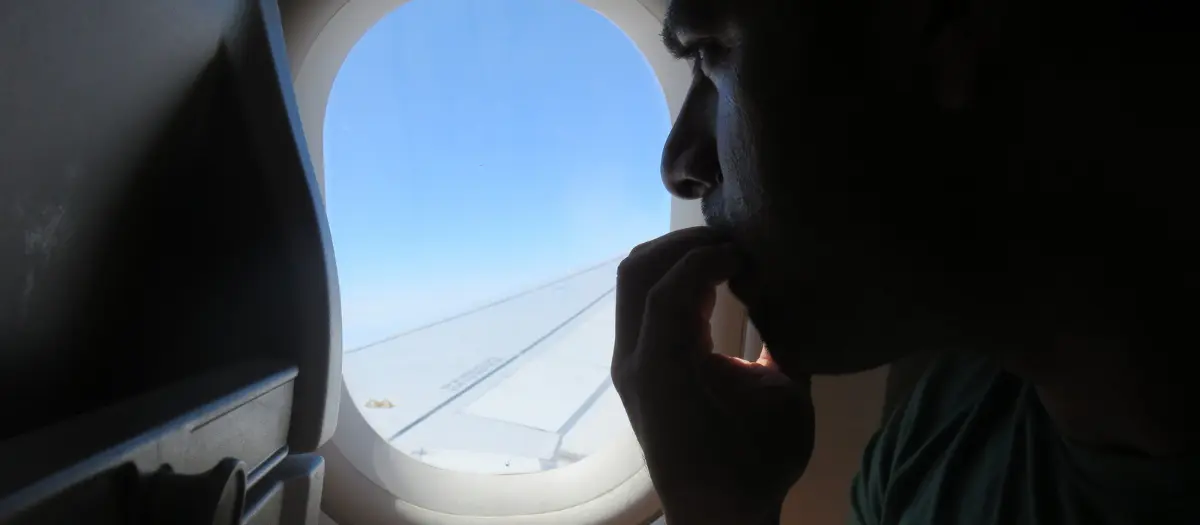
Being afraid of flying is far more common than you might think, and it makes sense: we fear what we don't know and what we can't control. The good news is that it's something you can work on.
Accidents are rare, and commercial aviation is one of the safest ways to travel. But repeating that to yourself isn't enough to make the fear go away. What really helps is understanding what's happening around you during the flight. Here's where to start.
In short
- Fear of flying is normal. It mostly comes from what we don't know and can't control.
- Movies don't help: they exaggerate almost everything that happens on an airliner.
- The noises and bumps you notice on board almost always have a simple explanation, and they're expected.
- A few simple habits help you stay calm on board.
- When fear keeps you from traveling, one-on-one coaching in a flight simulator lets you go further.
Did you know?
In 2025, 38.7 million commercial flights took place worldwide, with 8 fatal accidents.1
Are movies anything like reality?
There are plenty of movies and videos about aviation, and most of them don't reflect reality. To make things spectacular, filmmakers keep inventing more and more dramatic scenarios.
In the movie Flight, for example, the captain flies an airliner full of passengers upside down. In real life, that doesn't happen. Pilots follow precise procedures at every stage of the flight, and nothing looks like that kind of scene.
And Flight is far from the only one. In most movies about aviation, the situations and the way the crew reacts are exaggerated, or simply impossible on an airliner.
Are you reading too much into every noise?
Every noise, sensation and announcement on board matches something the crew is doing, in the cabin or in the cockpit. None of it is random. It all follows procedures, and only the crew knows exactly what each one means.
To fully understand everything that happens on a plane, you'd need to:
- be trained as an airline pilot;
- be trained as a flight attendant;
- sit in the cockpit to see every action;
- hear the conversations with air traffic control;
- know the airline's procedures.
As a passenger, you interpret things with what you know, and you often imagine something much worse than reality. The simplest approach is to trust the professionals on board. They're trained for this, and they know exactly what they're doing.
What really happens during a flight
A few moments of the flight worry almost every nervous flyer. Yet they're perfectly normal.
The engines get quieter after takeoff
A few minutes after takeoff, the engine noise drops noticeably. Don't worry, this is completely normal: the pilots switch from takeoff power to climb power, as planned. The plane keeps climbing, just more gently, and it can feel like it's sinking a little.
Thumps and whirring under the floor
Right after takeoff, and again before landing, you'll hear mechanical noises under the floor. That's the landing gear going up or coming down. The humming and small jolts you hear around the same time come from the flaps, which change the shape of the wings so the plane can fly more slowly.
Turbulence
Turbulence is simply moving air, a bit like bumps on a road for a car. It's unpleasant, but airliners are built to withstand very strong turbulence, well beyond what you'll usually feel as a passenger. Pilots anticipate it using weather data and turn on the "fasten seat belt" sign. That's a precaution, for comfort and to keep people from falling in the cabin.
What helps on board
A few simple habits make a real difference, before and during the flight:
- Choose your seat. Seats over the wings tend to feel the bumps less. Pick an aisle seat if you tend to feel cramped.
- Breathe slowly. Making your exhale longer than your inhale helps your body calm down.
- Watch the crew. If the flight attendants keep serving drinks calmly, everything is normal.
- Keep busy. A movie, a book, some music. The less you listen out for every noise, the better you'll feel.
- Prepare the trip. Sleep well the nights before, wear comfortable clothes and drink water during the flight.
- Go easy on caffeine and alcohol. Both can make anxiety worse.
Good to know
Don't hesitate to tell the crew you're a nervous flyer when you board. It's very common, they're used to it, and knowing they're aware often helps a lot.
Get to know the plane to get over your fear
Most fears of flying come from not knowing how a plane works. So why not overcome that fear through knowledge?
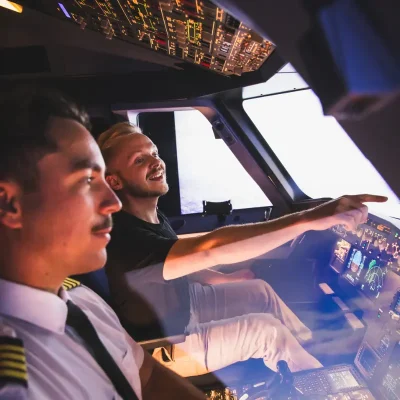
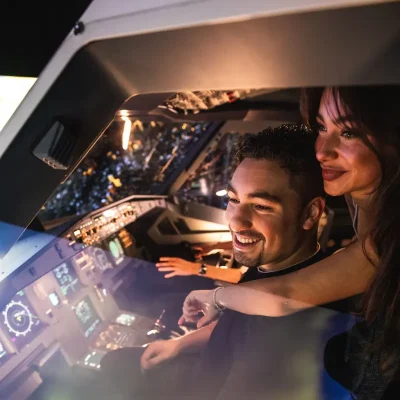
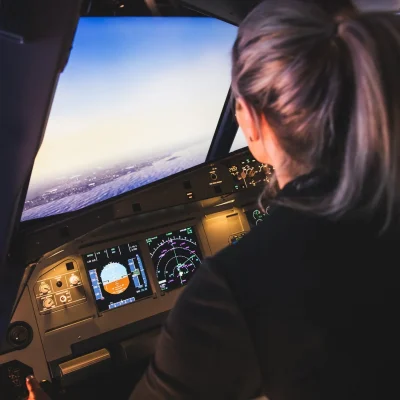
These tips are often enough when you simply feel a little nervous. When fear makes you avoid trips, it's worth working on it with someone. That's what the AviaSim Fear of Flying Course offers: one-on-one sessions with a flight instructor, in a full-size airliner cockpit, to relive a flight at your own pace. You hear the real sounds, see how the crew handles turbulence, and work up to a full flight, from takeoff to landing.
The course was created more than 10 years ago and takes place over two 2-hour sessions. 97% of participants report a significant reduction in their fear, based on the questionnaire they fill out at the end of the course. If you have any questions, our team is here to help.
Frequently asked questions
Can turbulence make a plane crash?
It's extremely rare. Airliners are built to withstand very strong turbulence, and pilots steer around the worst areas using weather data. The main risk is to passengers who aren't buckled in, which is why it's best to keep your seat belt fastened whenever you're seated.
Where should I sit if I'm afraid of flying?
Over the wings, where you tend to feel the bumps the least. If you tend to feel cramped, choose an aisle seat.
Can you really stop being afraid of flying?
Yes. Understanding what happens during a flight is often enough to ease the anxiety a lot. When the fear is stronger, working with a professional helps you go further.
Is the Fear of Flying Course a form of therapy?
No. It's a hands-on course with a flight instructor, built around understanding how a plane flies and getting comfortable in the cockpit. If your anxiety is severe or comes with panic attacks, talking to a doctor or a mental health professional is a good first step. Approaches like cognitive behavioral therapy are often recommended for flight anxiety.
Can someone come with me to the course?
The course is one-on-one with your instructor, without companions, so the sessions can be fully tailored to you. For everything else, see our FAQ.
Glossary
- Aerophobia (or aviophobia): the name for a fear of flying strong enough to disrupt or prevent travel.
- Turbulence: irregular air movement that makes the plane bounce. Uncomfortable, but rarely dangerous for the aircraft.
- Landing gear: the plane's wheels, tucked into the body during the flight.
- Flaps: movable panels at the back of the wings, extended for takeoff and landing so the plane can fly more slowly and safely.
- Flight attendants: the cabin crew, trained to keep passengers safe.
Safe travels, and enjoy the flight!
This article is for general information only and is not medical advice. If your fear of flying causes severe anxiety or panic attacks, please talk to a doctor or a licensed mental health professional.
1. IATA, Annual Safety Report 2025, March 2026.